Crawler Drilling Rigs
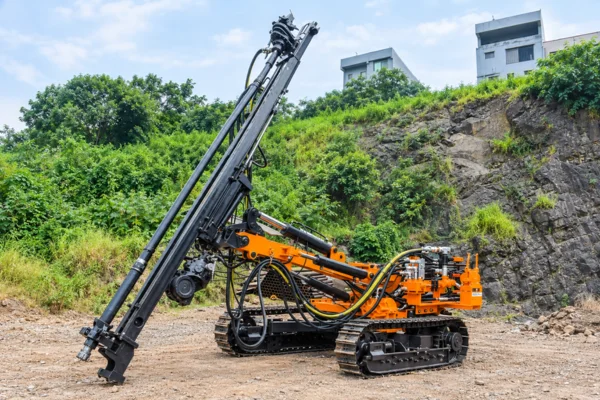
Crawler drilling rigs are self-propelled drilling machines designed for projects where terrain, site access and machine positioning are important. Riggers International manufactures and supplies crawler drilling rigs for water well, mining, geotechnical, construction and specialised drilling applications. Depending on the model, rigs can support DTH, rotary or rotary-cum-DTH drilling for different depths, bore diameters and ground conditions.
Drilling Methods for Crawler Rigs
Crawler rigs can be configured with different drilling systems according to geology and project requirements.
Rotary Drilling
Rotary drilling uses continuous rotation of the drill string and suitable tools for soil, weathered formations and other compatible ground conditions.
Rotary-Cum-DTH Drilling
Rotary-cum-DTH rigs provide greater flexibility where drilling conditions change between softer formations and hard-rock layers.
DTH Drilling
DTH drilling uses compressed air and a down-the-hole hammer for efficient drilling through hard and compact rock formations.
Applications of Crawler Drilling Rigs
Water Well Drilling
Crawler water well rigs are suitable for agricultural, residential, commercial and industrial groundwater projects.
Geothermal and Specialised Drilling
Higher-capacity configurations can be considered for geothermal, deep drilling and other specialised applications.
Mining and Quarrying
Crawler DTH rigs can support rock drilling, blast-hole preparation and selected mining and quarrying applications.
Geotechnical Drilling
Suitable configurations can be used for soil investigation, foundation studies and subsurface assessment work.
Construction and Infrastructure
Crawler rigs can support selected foundation, road, infrastructure and construction drilling projects.
How to Select a Crawler Drilling Rig
Terrain and Site Access
Ground conditions, slopes, access routes and available working space should be considered when selecting the crawler platform.
Compressor or Pump Requirements
DTH drilling requires a compatible air compressor, while selected rotary applications may require mud-circulation equipment.
Transport Requirements
Machine weight, dimensions and transport arrangements should be considered for movement between project sites.
Ground Formation
Soil, weathered formations, mixed ground and hard rock may require different drilling methods and tooling.
Drilling Depth and Hole Diameter
Required depth and hole size influence rig capacity, mast, drill rods and drilling-tool selection.
Drilling Method
The rig may require DTH, rotary or combination capability depending on geological conditions.
Features of Crawler Drilling Rigs
Actual features depend on the selected rig model and drilling application.
- Tracked undercarriage
- Hydraulic drilling controls
- High-torque rotary head
- Hydraulic feed and pullback
- Heavy-duty drilling mast
- Stable working platform
- DTH and rotary drilling options
- Multiple drill rod configurations
- Compact and heavy-duty models
- Compressor and mud-pump compatibility
Why Choose Riggers International?
Supporting Drilling Equipment
Compatible compressors, drill rods, hammers, bits and other drilling components can be supplied according to the rig configuration.
Project-Based Rig Selection
Machine requirements can be discussed according to drilling depth, hole diameter, geology, terrain and drilling method.
More Than Three Decades of Experience
Riggers International has over three decades of experience in drilling equipment manufacturing and supply.
Manufactured in India
Crawler drilling equipment is manufactured in India for domestic and international applications.
Multiple Drilling Configurations
DTH, rotary and rotary-cum-DTH crawler rigs are available for different project requirements.
Spare Parts and Technical Support
Technical guidance and compatible spare parts are available for suitable supplied equipment.
FAQs About Crawler Drilling Rigs
1. What is a crawler drilling rig?
A crawler drilling rig is a drilling machine mounted on a tracked undercarriage for self-propelled movement across suitable drilling sites.
2. How does a crawler drilling rig work?
The crawler tracks move the machine into position, while the mast, rotary head, feed system and drilling tools perform the drilling operation.
3. What is the difference between a crawler and truck-mounted drilling rig?
Crawler rigs provide tracked on-site mobility, while truck-mounted rigs are better suited to frequent road transport between accessible drilling locations.
4. Can crawler drilling rigs drill hard rock?
Yes. Crawler rigs configured for DTH drilling can operate in hard-rock formations with a suitable compressor, hammer and bit.
5. Can crawler rigs be used for water well drilling?
Yes. Suitable crawler rigs can be configured for water well and groundwater drilling projects.
6. How deep can a crawler drilling rig drill?
Drilling depth depends on the rig model, drilling method, hole diameter, drill rods and geological conditions.
7. What affects crawler drilling rig price?
Price depends on drilling capacity, hydraulic system, drilling method, crawler platform, compressor requirements and accessories.
8. What information is needed before buying a crawler drilling rig?
Provide the required drilling depth, hole diameter, ground conditions, drilling method, project terrain and supporting equipment requirements.