Core Drilling Rigs
Core drilling rigs are used to recover cylindrical rock samples for mineral exploration, geological investigation, geotechnical studies and subsurface assessment. The recovered core provides direct information about rock type, structure and mineralised formations. Riggers International manufactures and supplies core drilling rigs for different exploration requirements. Rig selection depends on drilling depth, core diameter, formation hardness, recovery method, site access and supporting drilling equipment.
Core Drilling Systems
Different core recovery systems are available according to drilling depth, formation and sampling requirements.
Wireline Core Drilling
Wireline systems allow the inner core barrel to be retrieved through the drill string without removing the complete rod string after each drilling run.
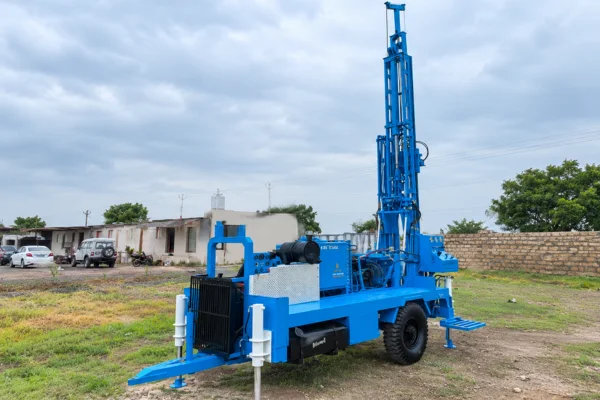
Truck Mounted Water Well Drilling Rigs
Suitable for groundwater and borehole projects where frequent movement between drilling locations is required.
Truck Mounted Water Well Drilling Rigs
Suitable for groundwater and borehole projects where frequent movement between drilling locations is required.
Core Drilling Rig Models
Riggers International offers different core drilling rig models for varying exploration and coring requirements.
TC-40 – Core drilling option for suitable exploration applications
CDR-1000 – Core rig for greater drilling requirements
CDR-2000 – Heavy-duty core drilling configuration
CDR-300 – Mid-range core drilling configuration
CDR-50 – Compact core drilling configuration
CDR-500 – Higher-capacity exploration model
CDR-150 – Exploration core drilling model
Applications of Mining & Exploration Drilling Rigs
Mining and Quarry Drilling
Core drilling supports exploration programs where detailed rock samples are required before further mine evaluation or development.
Geotechnical Investigation
Selected core drilling rigs can be used to obtain rock samples and geological information for engineering studies.
Subsurface Investigation
Suitable configurations can support specialised projects where physical geological samples are required.
Geotechnical Investigation
Core samples provide direct subsurface information for geological logging and formation analysis.
Mineral Exploration
Used to recover rock cores for identifying geological formations and potential mineralised zones.
Core Drilling Equipment
A core drilling rig operates together with compatible sampling and drilling components.
Hydraulic Feed System
The feed system controls drilling movement and applied pressure during coring operations.
Diamond Drill Bits
Drill bits cut the formation while maintaining the required core and borehole dimensions.
Drill Rods
Drill rods transfer rotation and drilling force between the rig and core drilling assembly.
Rotary Head
The rotary head provides controlled rotation for the drill string and cutting tools.
Core Barrels
Core barrels collect and retain the cylindrical rock sample during drilling.
Features of Core Drilling Rigs
- Controlled hydraulic feed
- High-torque rotary system
- Heavy-duty drilling mast
- Core recovery capability
- Wireline drilling options
- Diamond bit compatibility
- Multiple drill rod configurations
- Stable drilling platform
- Flexible machine configurations
- Compatible core drilling tools
Why Choose Riggers International?
Technical and Spare Parts Support
Customers can receive guidance on equipment selection together with compatible drilling and hydraulic replacement components.
Core Drilling Tools and Equipment
Compatible core barrels, drill rods, bits and related drilling components can be supplied according to the selected system.
Project-Based Rig Selection
Equipment requirements can be discussed according to depth, core diameter, geology, recovery system and site conditions.
Core Drilling Equipment Experience
Riggers International has more than three decades of experience in drilling equipment manufacturing and supply.
Sample-Focused Drilling Configurations
Rig systems can be selected according to core recovery requirements, formation and drilling method.
Multiple Core Rig Models
Different machine capacities are available for varying exploration depths and project requirements.
Frequently Asked Questions
1. What is a core drilling rig?
A core drilling rig is a machine used to cut and recover cylindrical rock samples for geological, mineral exploration and investigation work.
2. What is diamond core drilling?
Diamond core drilling uses a diamond cutting bit to penetrate rock and recover a continuous cylindrical core sample.
3. What is wireline core drilling?
Wireline drilling allows the inner core barrel to be retrieved through the drill string without removing the complete rod string.
4. Why is core recovery important in mineral exploration?
Recovered core provides physical geological samples that can be logged and analysed for rock type, structure and mineralisation.
5. What is the difference between conventional and wireline core drilling?
Conventional systems require retrieval of the core barrel through the drilling arrangement, while wireline systems recover the inner barrel through the drill string.
6. Can core drilling rigs drill hard rock?
Yes. Suitable diamond core drilling systems can be used in hard-rock formations when matched with the correct bit and drilling configuration.
7. What affects core recovery quality?
Formation conditions, bit selection, core barrel configuration, drilling parameters and operator control can influence sample recovery.
8. How deep can a core drilling rig drill?
Drilling depth depends on the rig model, core diameter, drilling system, rod configuration and geological conditions.
9. What affects core drilling rig price?
Price depends on rig capacity, drilling depth, core recovery system, hydraulic configuration, drill rods, core barrels, bits and supporting equipment.
10. What information is needed before buying a core drilling rig?
Provide the target depth, required core diameter, formation conditions, recovery method, project location and supporting equipment requirements.