- Define the hole first: depth, finished diameter, overburden and casing.
- Let the formation choose the method: DTH for rock, rotary for loose ground, both for mixed strata.
- Choose the carrier for your sites, then size the compressor or mud pump to the hammer and hole.
Start with the hole, not the rig
Write down the target depth, the finished diameter you need for casing and pump, and the overburden you expect at the top of the hole. Those three numbers decide the feed force, rotary torque, rod size and circulation the rig must deliver.
If you drill for many customers, use your typical hole and your hardest regular hole. Buying for the occasional extreme job usually means paying for capacity you rarely use.
Let the formation choose the method
Down-the-hole (DTH) drilling puts a pneumatic hammer directly behind the bit. It is fast and straight in hard and fractured rock, but needs a compressor matched to the hammer.
Rotary drilling relies on rotation and weight, usually with mud circulation that carries cuttings out and holds a loose hole open. It suits soil, sand, clay and alluvium.
Many borewells start in soil, pass through weathered rock and finish in hard rock. A DTH-cum-rotary rig such as the DTHR series lets you change method as the ground changes.
Choose the carrier for your sites
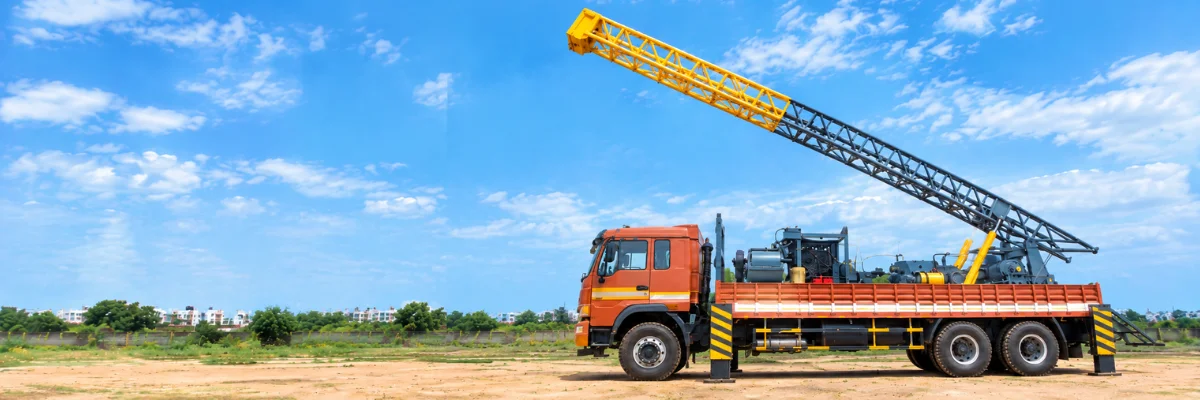
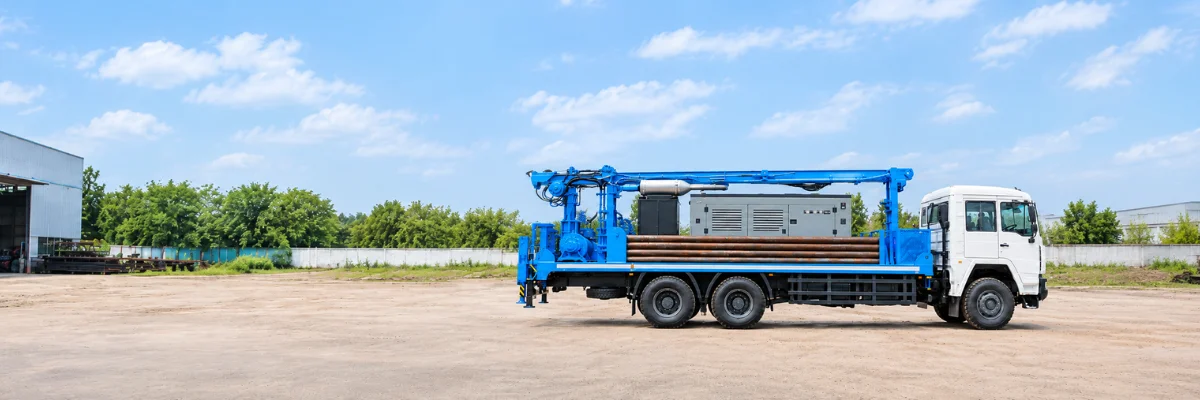
Truck-mounted rigs carry the mast, compressor, tools and often a mud pump on one vehicle and move quickly by road. Tractor-mounted rigs such as the TBW 40 suit farms and moderate depths. Crawler rigs reach remote, sloping or soft ground where a truck cannot set up level.
Check road widths, gate widths, turning space and the ground bearing on the sites you visit most often.
Size the compressor or mud pump
For DTH work, hammer size and hole diameter set the air you need. Published water-well packages range from 600 cfm at 200 psi to 1,500 cfm at 400 psi. Deeper holes and water inflow need more pressure.
For rotary work, the mud pump must lift cuttings at the hole size you drill. The DTHR models list mud pumps from 500 lpm to about 2,500 lpm.
Plan rods, tools and spares with the rig
Rod diameter and length must suit the mast, rod changer and hammer. Order hammers, bits and rods with the rig so threads and sizes match from day one, and agree a recommended spares list.
Ask for a complete, written scope
Compare quotations line by line: drilling assembly, carrier, compressor or pump, rods and tools, options, commissioning and warranty. Our quotation checklist lists what to look for.
Questions
Which borewell rig is best for hard rock?
A DTH rig with a compressor matched to the hammer and hole size. If the top of the hole is loose, a DTH-cum-rotary rig handles both sections.
Is a tractor-mounted rig enough for farm borewells?
Often, for moderate depths and diameters. The TBW 40 is published for 4.5–6.5 inch holes to 500 ft. Deeper or larger holes need a truck rig.
Should I buy the compressor with the rig?
Buying them together makes sure air capacity matches the hammer and hole. If you already own a compressor, share its cfm and psi so the rig is configured around it.